Mood: Reflective | Post Type: Behind the Scenes | After the Show: Week +10
Getting People Through the Door
In my previous three blogs, I've explored promoting my first solo show through social media, print and, most recently, the press. So surely, once the exhibition opened, all that promotion was done?
Not quite.
This fourth and final instalment is a combination of everything I'd already done to encourage people to visit, plus a few additional tactics I hadn't anticipated needing. Because, as it turns out, promotion doesn't stop when the exhibition opens. You still have to get people through the door.
Opening Tomorrow. Not Today
We spent an entire day setting up the gallery and, while we were doing it, several people tried to come inside. Lovely that people were keen to visit. Slightly less lovely when you're a novice exhibitor trying to get everything ready! My mum cleverly made use of some of my many remaining postcards, placing them in the window so people could see what was happening and when the exhibition would open. The only slight problem was that the opening times were rather small on an A5 poster.
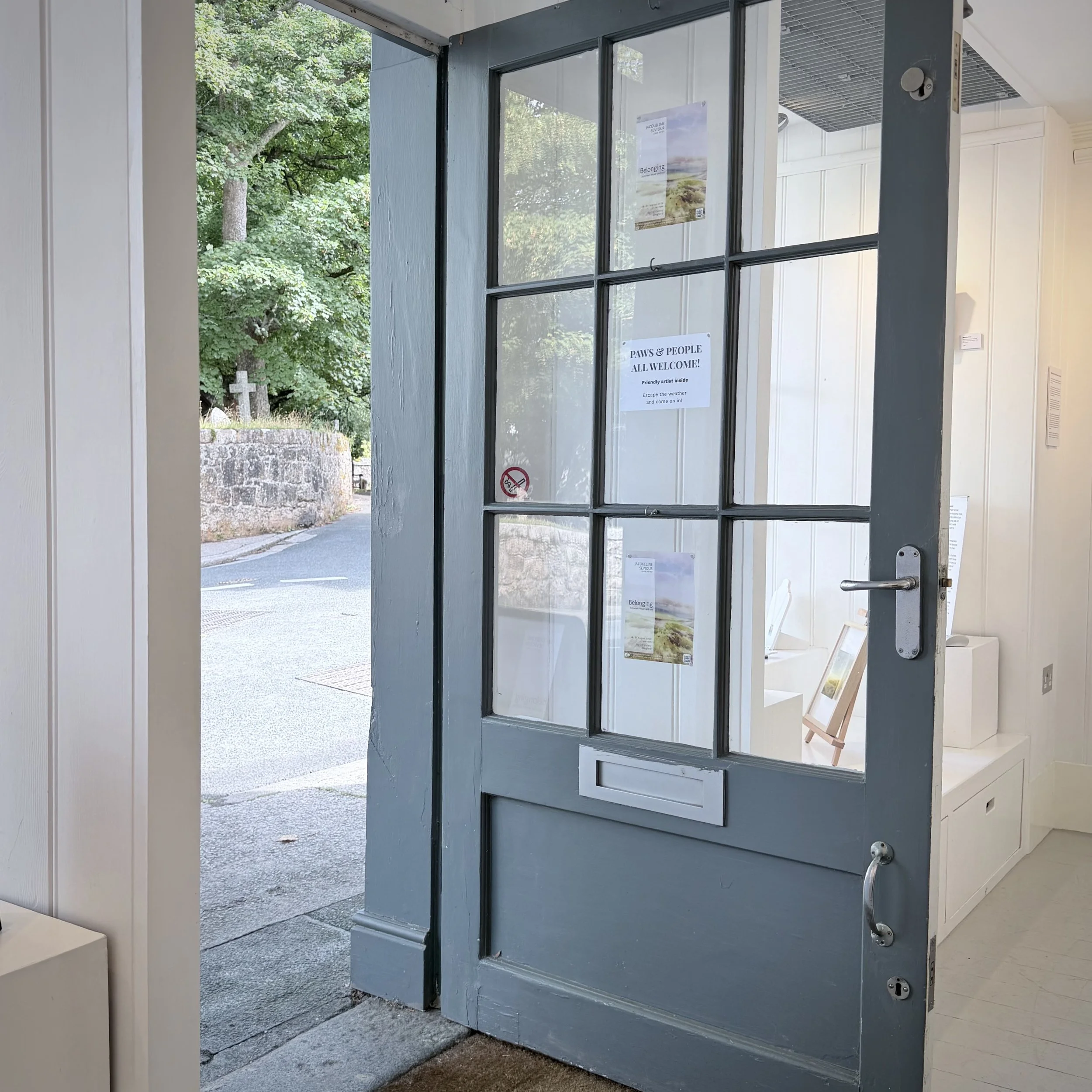
A6 Posters in window of the gallery door
What I quickly realised was that locals knew the gallery changed exhibitions every week. Tourists didn't. And several of our enthusiastic would-be visitors were tourists, including some who spoke very little English, which made explaining that we weren't actually open yet a little more complicated. It seems incredibly obvious now, but what I really needed was a great big sign saying:
OPENING TOMORROW
I'd felt I couldn't put my exhibition poster in the A-frame outside until I was officially open. But I hadn't thought about how to communicate what was happening in the meantime. Another lesson learnt.
When Your Gallery Looks a Little Too Professional
Once we were open, I discovered another barrier I hadn't really considered. People needed to know they were welcome to come in. Now, this may have been just be my perspective, but my exhibition had a fairly minimal, contemporary feel. That was partly by design, but also because my work is on the smaller side, so there was quite a lot of lovely white wall.
I was also wearing a dress and sitting at the little desk. Admittedly, I had trainers on underneath, but nobody could see those. Looking back, I could easily have been mistaken for some sort of gallery gatekeeper.
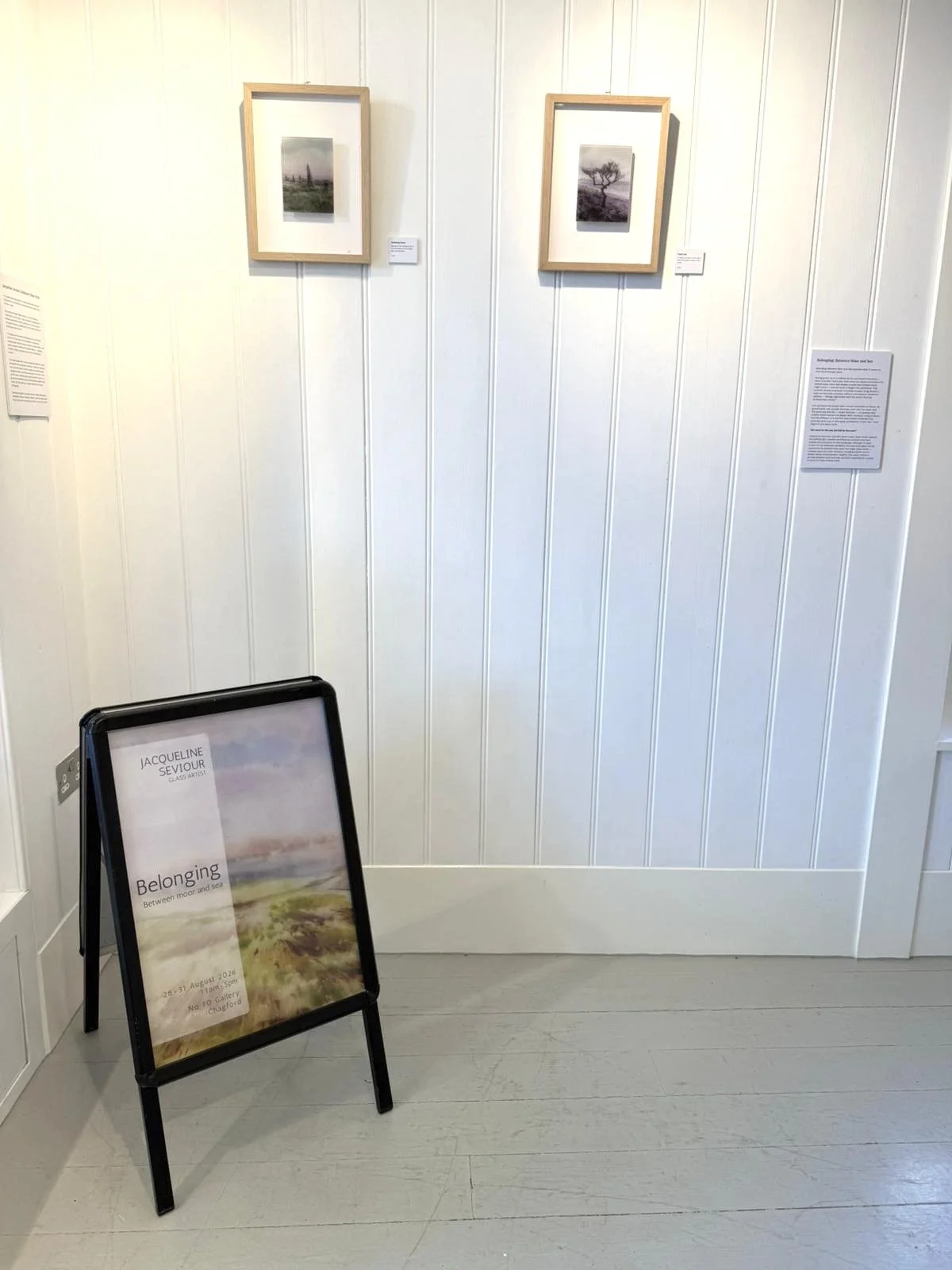
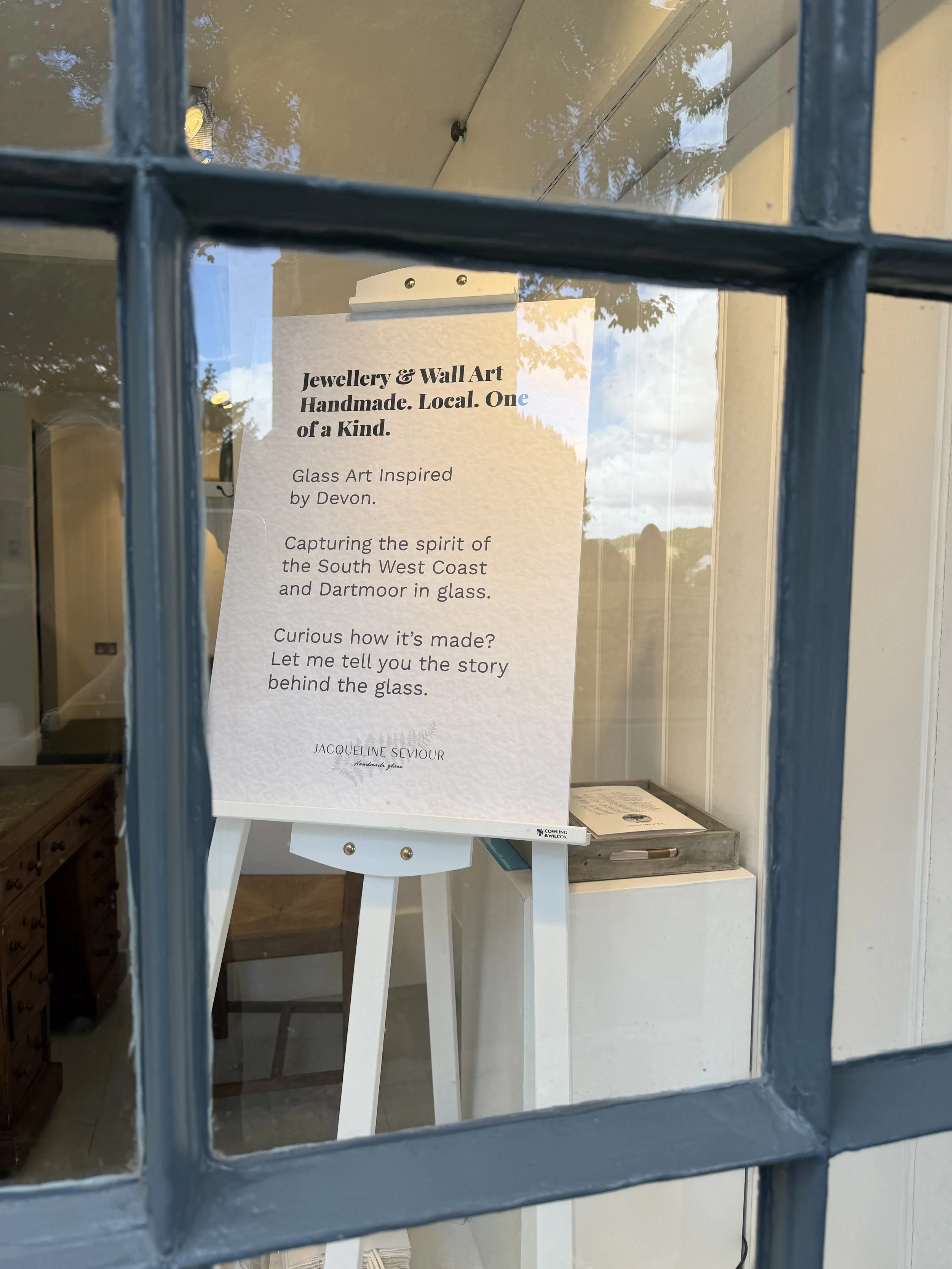
The penny started to drop when two separate visitors on the first day asked whether it was my gallery. One also admitted they'd thought it was a high-end contemporary gallery and had felt a little nervous about coming in, because not all galleries are particularly welcoming.
Well, that wasn't quite the impression I'd been aiming for!
Although I think Marie, the gallery owner, and I can take a little credit here. Firstly, the gallery itself is gorgeous, even when it's empty. It's such a wonderful, light, clean and thoughtfully designed space. And secondly, I'll happily take some of the glory for how my work was presented. Apparently, we'd done such a good job that we'd made the place look slightly intimidating.
Not quite the result I'd intended.
The Simplest Trick in the Book
I remembered something ridiculously simple from my stint working in retail when I was younger. Keep the door open. That's it.
With the gallery door open, people could see inside, hear what was happening and wander in without having to make a conscious decision to open a closed door. And it worked. People wandered in. Unfortunately, for two days the weather was foul, complete with yellow storm warnings, and keeping the door open wasn't really an option. So after a couple of days, I realised I needed another sign. Something along the lines of:
Paws and humans welcome. Friendly artist inside.
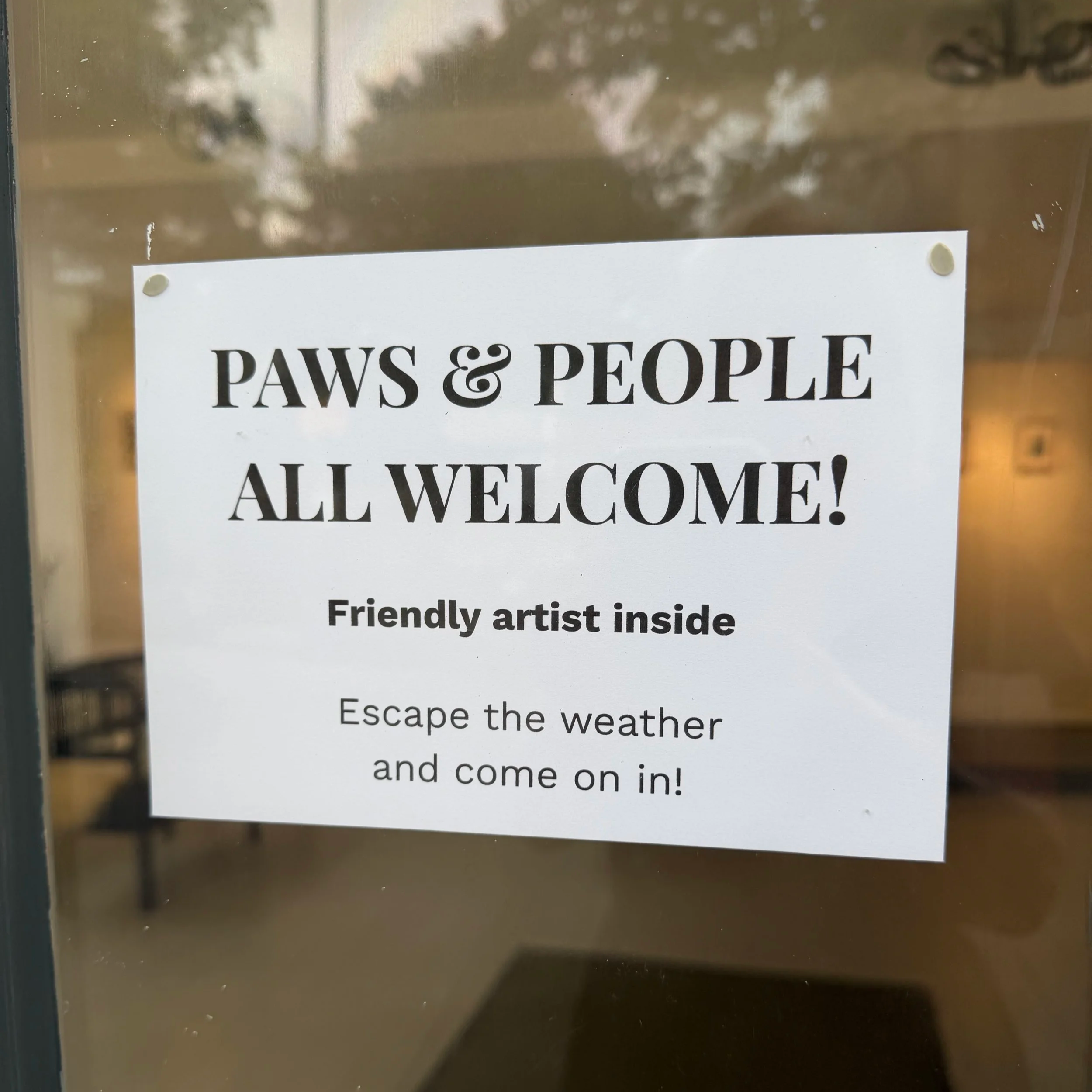
Welcome sign
Because sometimes people just need a little reassurance that they're allowed to open the door and come in. Thinking about it now, I'd probably add something like:
Resident artist here until [date].
Not only would that make it clear that there was an actual, friendly human being inside, but it would also give people a reason not to put off visiting until another day.
Keeping in Touch Without Keeping Anyone Hostage
Once people were inside, there was another question. How could I encourage them to stay connected with me and my work? Not by holding them hostage, obviously. But if someone was genuinely interested in what I was doing, I wanted to make it easy for them to find me again.
And for visitors who didn't particularly want to chat, or who were happier engaging digitally, I wanted to give them that option too. I'd put up small signs with QR codes linking to my newsletter, blog and Instagram. However, I didn't notice anybody photographing them. The signs were smaller than A5, so perhaps they were simply too easy to overlook. Next time, I'd consider making them A4 and giving them a more prominent position.
But there was one QR code that did get some attention.
The QR Code That Earned Its Keep
I'd made the decision to put the exhibition collection online before the show opened. It was another job on an already rather overwhelming to-do list, and at the time I did wonder whether I was creating unnecessary work for myself.
But I'm so glad I did it.
During the exhibition, I saw two people stop on their way out and photograph the QR code that allowed them to revisit the collection online afterwards. That was exactly what I'd hoped for. Some people need time to think about a purchase, particularly when it's a piece of original artwork. And that's absolutely fair enough. Having the collection online meant they could go home, have another look and decide in their own time. It also meant I didn't have to face the prospect of uploading everything after the exhibition, when I was, quite frankly, knackered.
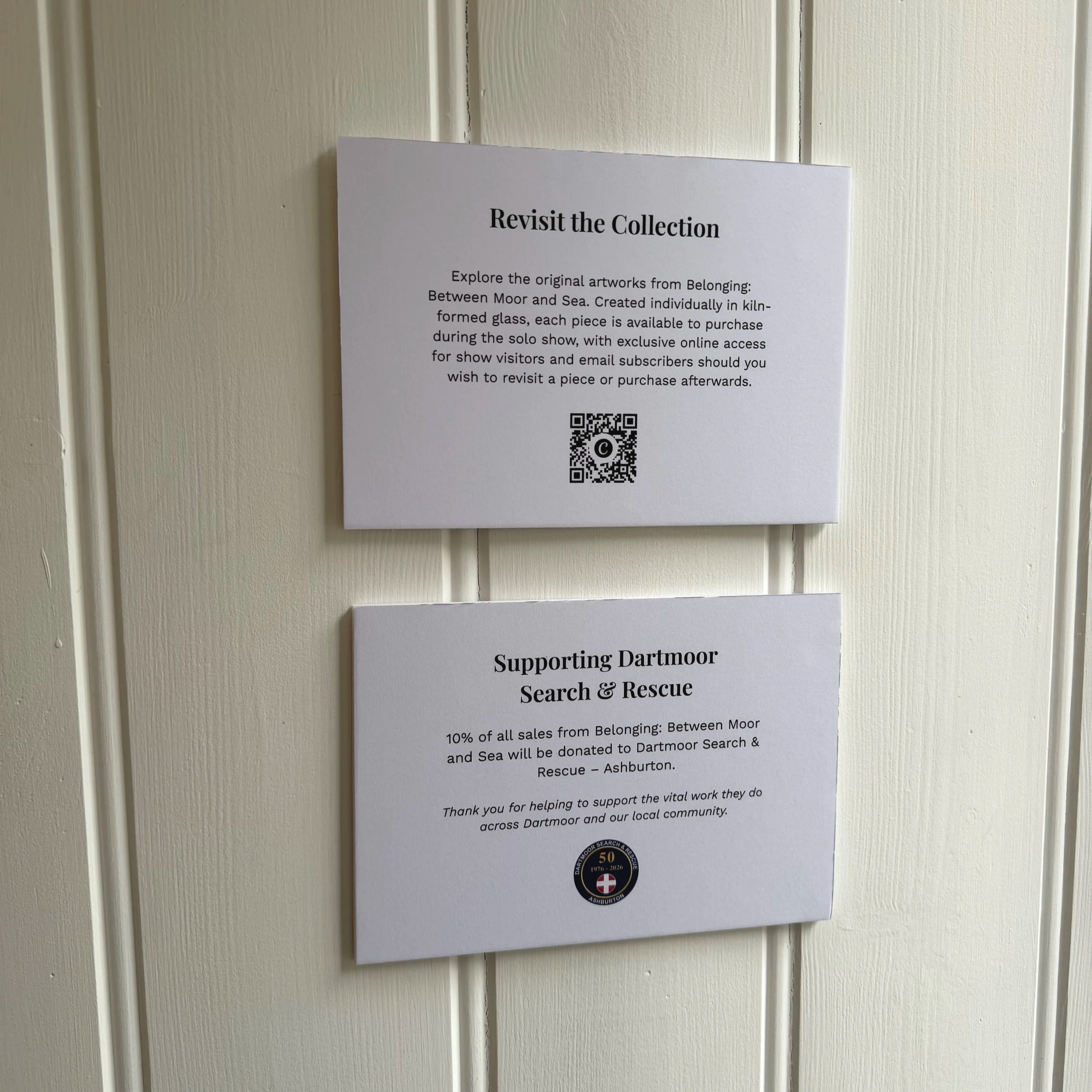
The QR code that gave visitors an extra chance to look at my work
I'd also thought through the delivery options in advance. Visitors could collect their purchases from the gallery on my final day free of charge, arrange local delivery within the postcode area for £5, or choose UK Special Delivery for £20. That meant people didn't necessarily have to make an immediate decision about how they'd get a piece home, particularly if they were visiting the area on holiday.
It was a bit of extra preparation before the exhibition, but it made things much easier once the doors were open. And it's something I'd definitely do again.
A Lesson in Noticing People
There were a few less-than-wonderful moments with members of the public, too. One was entirely down to somebody else's attitude. But another made me realise there was something I could have handled better. I was talking to a couple who had made a special trip to see me and the exhibition. We had a ridiculous amount in common, and they were just the most delightful human beings.
You know when you meet people and immediately feel you've found kindred spirits? It was one of those conversations. And when that happens, I can become rather absorbed in the moment. Meanwhile, another visitor was hovering in the background, waiting to speak to me. I find it difficult to break away when I'm properly engaged in a conversation, especially when the people I'm speaking to have made a particular effort to come and see me.
After perhaps a minute of waiting, the other visitor walked out rather disgruntled. I wouldn't quite say he stormed out, but it was definitely an exit with a message. At the time, I was a little taken aback. If it had been me, I'd probably have waited patiently or said I'd pop back in ten minutes. But then I realised that just because I would behave that way doesn't mean everybody else will.
And, actually, I could have acknowledged him without abandoning the conversation I was having. Something as simple as:
"I'll be with you in a moment."
Or:
"Did you have a particular question for me?"
That would have let him know I'd seen him and that he wasn't being ignored. It sounds so obvious now.
I think there's a lesson there for future exhibitions and events, too. When you're the artist, the salesperson, the receptionist and the person answering all the questions, you have to learn how to divide your attention. Not necessarily one of my natural talents, but something I can work on.
So, That's a Wrap on Promotion
And I think that's finally a complete wrap on promotion — whether online, in print, through the press or during the exhibition itself. If I did all of this again, I'm sure I'd discover another dozen things I'd done wrong, missed completely or could have done better. But for now, I feel I've got a pretty good foundation to build on.
Social media taught me that sharing the journey can be as important as advertising the destination.
Print taught me that physical promotion still has a place — although perhaps not 450 postcards' worth.
Press taught me that sometimes you have to hand over control of how your work is presented and be grateful that it's being seen.
And the exhibition itself taught me that getting people to visit is only part of the job. You also have to make them feel welcome when they arrive and give them an easy way to stay connected once they've left.
Most importantly, I've realised that promotion isn't one thing you suddenly start doing a few weeks before an exhibition. It begins much earlier than that, carries on right through the exhibition itself and, hopefully, continues long after the last visitor has walked out of the door.
So that's my four-part promotion adventure complete.
Hopefully, if you're embarking on your own debut solo show, some of my lessons — including the ones I learnt rather later than I should have — might save you from having to learn quite so many of them yourself.
This is Episode 35 in my ‘Solo Show Diary’ series — a behind-the-scenes look at how my work develops. You can find my earlier posts here.