Promoting My Solo Show: Getting Seen
Mood: Reflective | Post Type: Behind the Scenes | After the Show: Week +4
More learning than I expected
From the get-go, I knew promotion was going to be important. There was little point spending a year creating enough work to fill a gallery if nobody knew the exhibition was happening.
As with so many aspects of putting on my first solo show, a lot of my knowledge came from listening to podcasts. One that particularly stuck with me was an episode of Ask An Artist, hosted by Peter Keegan and Tom Shepherd, called 6 Tips for Putting on an Exhibition. One of the things they talked about was not relying solely on social media to promote a show, but looking at all the different ways you could get the word out.
So I made notes on the different types of promotion and added them to my ever-growing list of things to explore.
I'd originally planned to cover everything in one blog, but as I started writing I realised there were far more lessons here than I thought. So I'm going to split it into three: online — mainly social media — print, and press. I'm also going to add in promotional signage during the actual exhibition because, as I discovered, just because the event is live doesn't mean the promotion stops.
Let's start with social media…
I'd heard other artists talk about worrying that they were bombarding their followers with posts about an upcoming exhibition, and I did wonder about that myself.
My social media following wasn't huge to begin with, but something unexpected happened while I was preparing for the show. By regularly sharing Reels of my progress and process, my following actually quadrupled. And I think that's an important point. It's the preparation and the making that can capture an audience, not necessarily just the finished show.
I'd heard before that there are lots of ways to tell people you have an upcoming exhibition without repeatedly saying, “I have an upcoming exhibition!” Turns out, that's actually true.
I wasn't blatantly advertising the exhibition in every post, but there would often be a gentle hint in the words accompanying it. The exhibition became part of the story rather than the sole reason for posting.
Instagram is where I have my glass artist page, but I also turned to Facebook and our local community groups. I posted in four local town and village hubs, all of which have slightly different rules. If you've been a member of these groups for a while, it's definitely worth checking the rules again before you start promoting anything to make sure the admins will actually accept your post.
Living rurally, I could probably have joined quite a few more surrounding village groups too. I didn’t, mainly because time disappeared. So there's a lesson here: do the research and join relevant local groups early. Don't wait until you're two weeks away from your exhibition and suddenly start looking for them. This task didn't just slip down my to-do list; it dropped off the bottom entirely.
I also tried a few of the larger Facebook groups connected with Dartmoor. I'd seen other artists promoting events in them, but if I'm honest, I could never find my posts afterwards, so I'm assuming they weren't accepted.
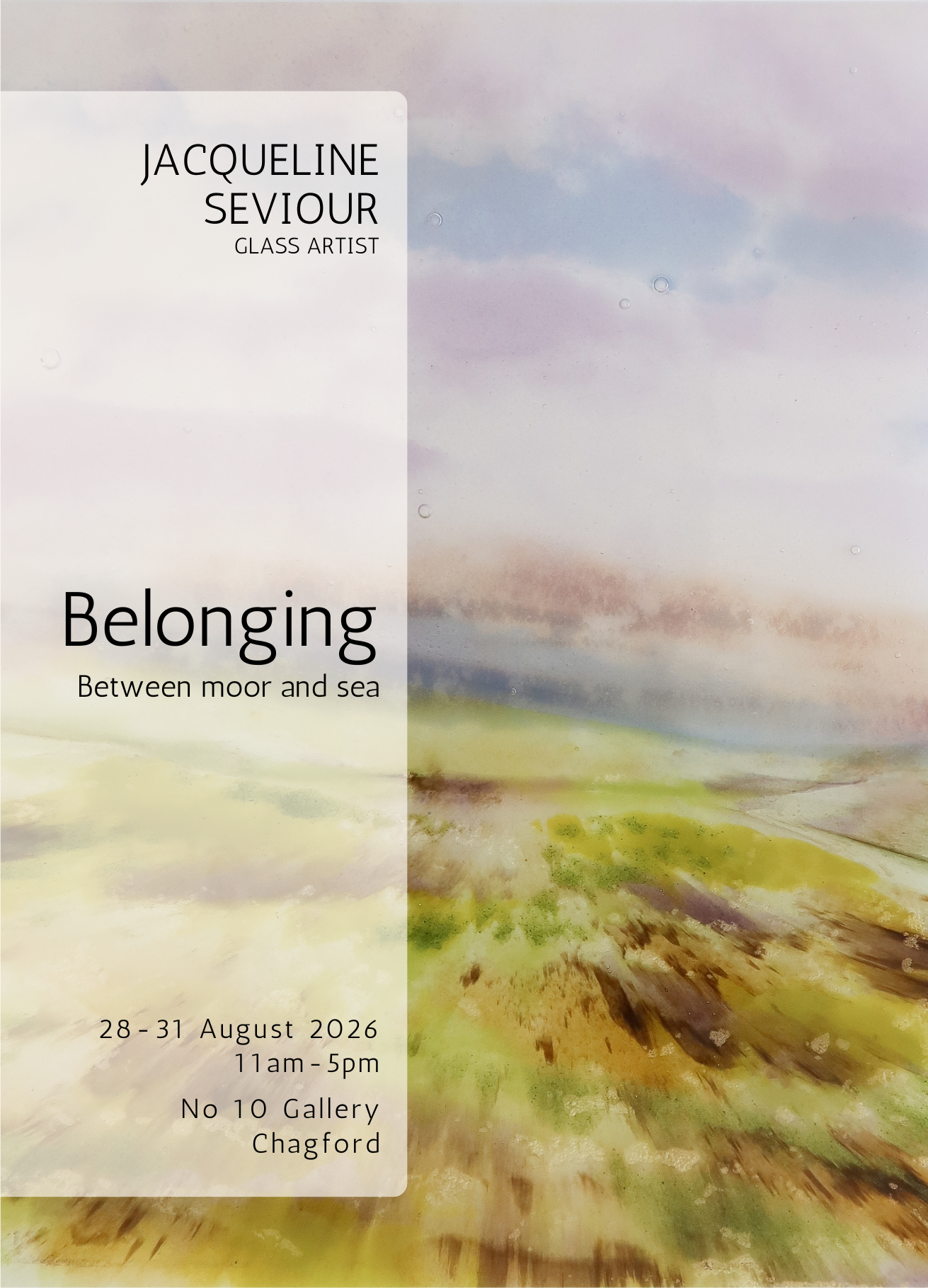
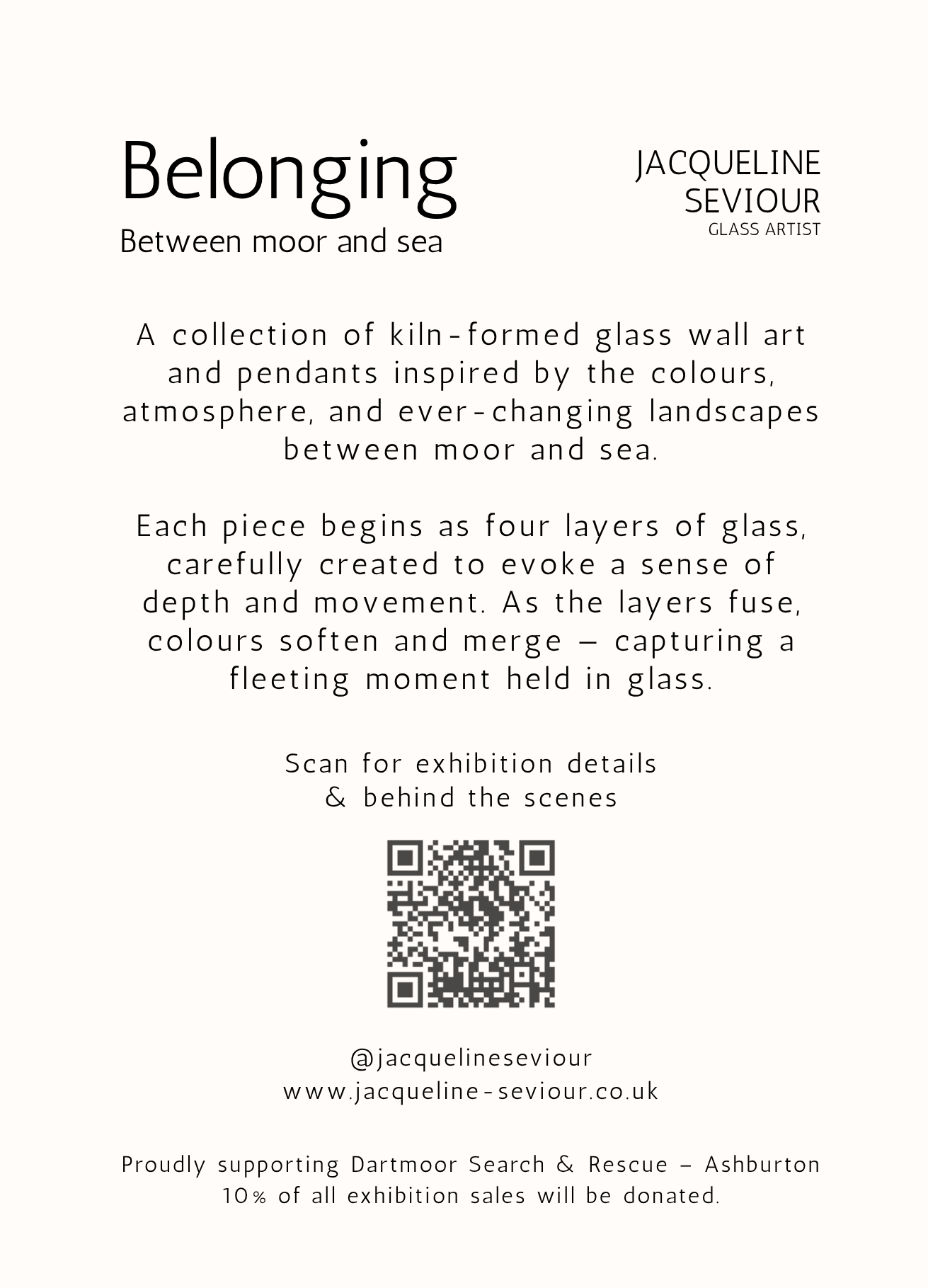
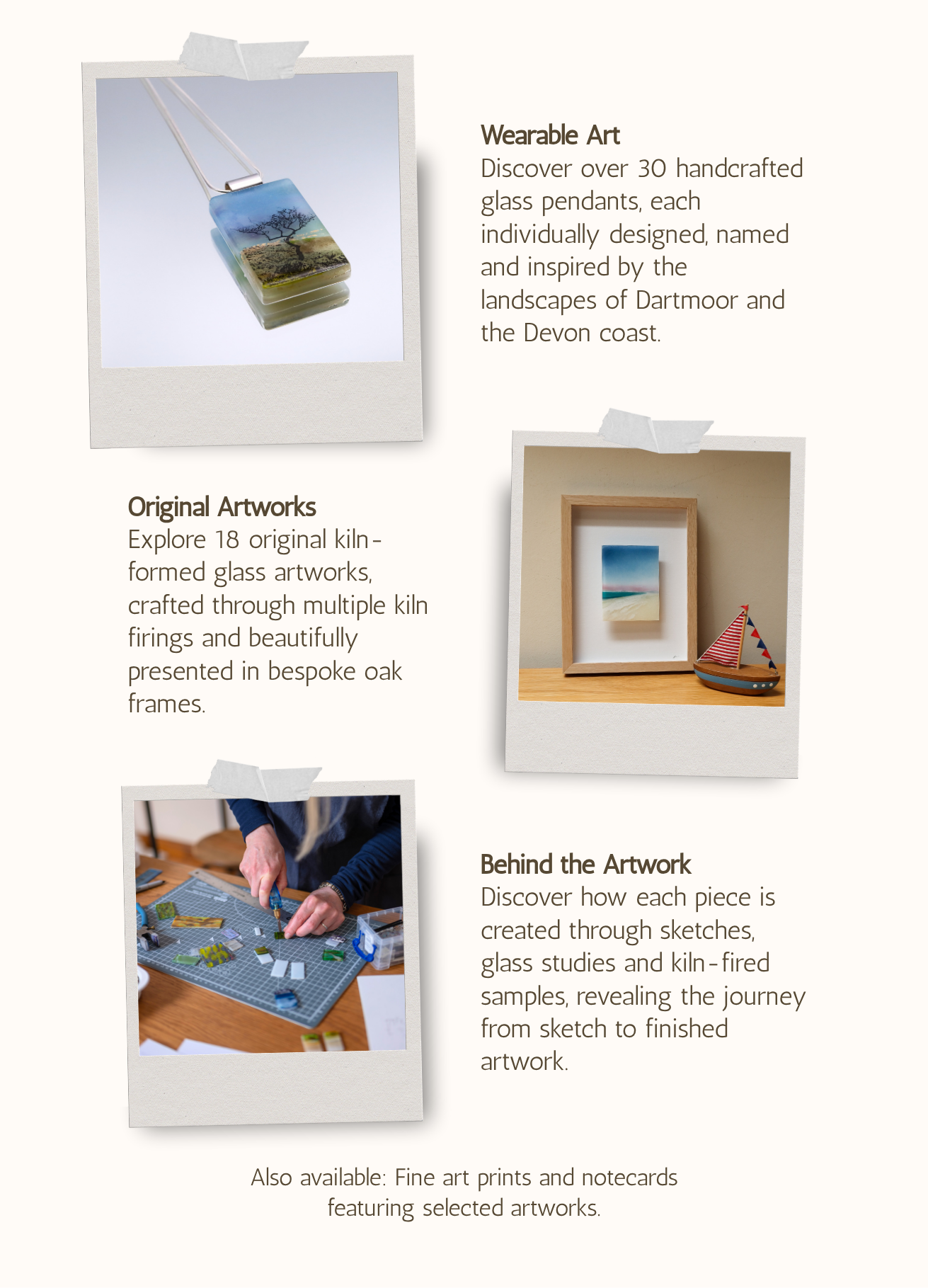
For the local groups, rather than just posting my exhibition poster, I created a three-image post: the poster, some more information about the show, and photographs showing the different types of work people would actually see. I'm really pleased I did this. I don't think the poster on its own would have generated the same interaction.
I started posting around two weeks before the exhibition and deliberately shared to a different village or town group each day. There's quite a lot of crossover between them because, when you live around here, you need to belong to several community groups just to keep track of the road closures, accidents, flooding, fallen trees, roaming animals and the latest crater that's appeared in the road.
I didn't particularly want my exhibition popping up four times on someone's Facebook feed in one day, so I drip-fed the posts instead. Then, 24 hours before the show, I posted again at different times of the day.
Collaborations helped too
My fortnightly blog gave me another way of talking about the exhibition in the run-up without every post simply being an advert for it. Where it was relevant, I'd also tag or invite other accounts to collaborate. Marie at No. 10 was always incredibly supportive and accepted collaborations even when the exhibition was still quite a long way off, which I'm very grateful for.
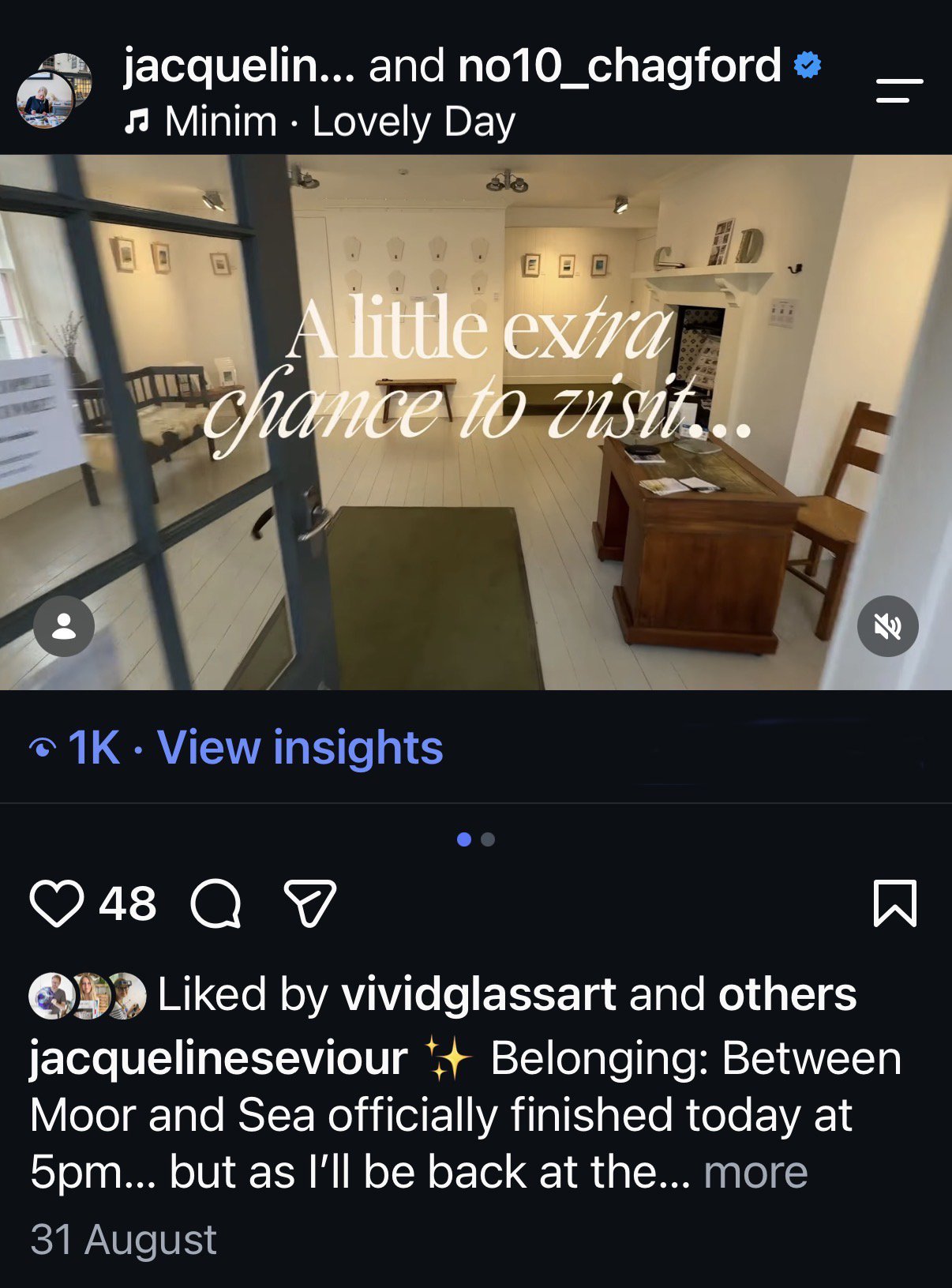
Where I wasn't so good was in those final few days before the show — or even while it was actually running. I could probably have done more to gain visibility through No. 10, particularly as its following is larger than mine. But by then, I'd run out of time and, if I'm honest, steam. Could I have posted more while the exhibition was happening? Absolutely. But how much difference would I really have made by spending my time on Instagram when I was physically in the gallery, talking to the people who had actually walked through the door?
I'm still not sure.
I can see more value in doing that for an exhibition running over several weeks. But when your doors are only open for four days, if someone isn't already planning to come and see you, how likely is a last-minute Instagram post to change their plans?
Maybe it would.
I just don't know.
Not every avenue worked as I'd expected
One avenue I thought might be more successful was the charity I'd chosen to support, with 10% of my exhibition sales being donated to them.
I'd hoped there might be some shared promotion around the show, but none of my collaboration requests were accepted or shared, and a planned visit to the exhibition to create some social media content unfortunately didn't materialise. Was there more I could have done to build that relationship beforehand? Possibly. Equally, when you're working with an organisation largely supported by volunteers who have busy jobs, families and multiple people managing social media accounts, perhaps it's simply not as straightforward as you imagine it will be.
It's another thing I'd think about differently next time: if you're hoping another organisation will be part of your promotion, have that conversation early and be clear about what — if anything — you can realistically expect from each other.
Don't forget the audience you already have
My monthly newsletter had been very sparse, but I made the effort to get both a July and August edition out before the exhibition. My mailing list only had around 65 people on it.
It's very easy to put the word only in front of a number like that. But imagine putting 65 people in a room, all of whom have actively chosen to hear about what you're doing. Suddenly, it doesn't sound quite so small.
I really don't force my newsletter onto anyone. Signing up has to be 100% their choice, which means those 65 people are genuinely interested in me and my glass. After I sent the final newsletter before the exhibition, several people emailed to wish me luck, which was genuinely lovely. And people from my mailing list actually came to the show.
So while I was busy thinking about how to reach new people, there was also a reminder not to overlook the people who were already cheering me on.
So, did online promotion work?
Yes. Social media and the online world definitely have their place. Sharing the process helped grow my audience. Local Facebook groups helped me reach people beyond my own followers. Collaborations extended that reach further, and my relatively tiny mailing list proved that numbers aren't everything when the people behind them genuinely want to hear from you.
But was online promotion the only answer?
Absolutely not.
Surprisingly, going decidedly old-school with print definitely had its place too — although I may have got a little carried away with the quantity. I originally thought promotion would be one blog. Clearly, I had more lessons to learn than I realised. So next time: posters, postcards, where on earth you're actually allowed to put them, and the small matter of why I ended up having 450 postcards printed.
This is Episode 32 in my ‘Solo Show Diary’ series — a behind-the-scenes look at how my work develops. You can find my earlier posts here.